

When decay or a small fracture affects a tooth, today’s restorative options allow us to repair the problem without drawing attention to it. Composite (tooth-colored) fillings are made from advanced resin materials that are matched to the shade of your enamel and blended to mimic the translucency of a natural tooth. The result is a restoration that restores function while keeping your smile visually intact.
These materials are engineered to provide both strength and aesthetics. Unlike older metal restorations, composites bond to the tooth structure and are free of metals, making them an appealing choice for patients who want a discreet, biocompatible solution. Composite fillings are commonly used for front and back teeth when the area of decay is suitable for a direct restoration.
At Maryland Dental Center, we prioritize repairs that look as good as they perform. We’ll explain why a tooth-colored filling is an appropriate option for your situation and how it fits into a broader plan to preserve your oral health.
One of the greatest advantages of composite restorations is their ability to adhere to enamel and dentin. This adhesive bond means less healthy tooth material needs to be removed during preparation, which helps preserve natural tooth strength and long-term integrity. Conservative treatment supports a more predictable outcome and leaves more options open for future care if your needs evolve.
Because the composite material forms a micromechanical bond with the tooth, it helps seal margins against bacteria that cause recurrent decay. When placed correctly, this bond reduces microleakage and contributes to longer-lasting restorations. Proper technique and surface preparation are essential—factors that experienced clinicians pay close attention to during every filling.
Composite restorations can also be used to repair minor chips and to replace old, failing restorations with a more discreet solution. The conservative nature of this approach makes it a preferred choice for patients who wish to retain as much of their natural tooth as possible.

A typical filling appointment is streamlined and focused on comfort. After we review the area and take any needed images, local anesthesia is used to ensure you remain comfortable throughout the procedure. In most cases, a single visit is all that’s required to remove decay and place a composite restoration.
Placement is done in careful layers. Each increment of resin is shaped and cured with a specialized light so the material hardens uniformly and achieves optimal strength. Layering allows the clinician to recreate natural contours, contact points, and occlusion so the repaired tooth feels and functions like the original.
We make patient comfort a priority and will explain each step as we go. If anxiety is a concern, we can discuss options such as sedation dentistry to make the visit more relaxed. Our goal is to make the experience predictable, efficient, and as comfortable as possible for every patient.
After receiving a composite filling, most patients return to normal activity quickly. It’s common to have temporary numbness from local anesthesia—avoid chewing until sensation returns to prevent accidental biting of lips or cheek. Mild sensitivity to hot, cold, or pressure can occur for a few days as the tooth adjusts; this generally subsides without intervention.
If you notice sensitivity that worsens over time, a persistent ache, or a change in your bite, contact our office so the restoration can be evaluated and adjusted if necessary. Small adjustments to the filling surface or polish can often resolve bite-related discomfort. Regular checkups help ensure that restorations remain intact and functioning as intended.
Daily oral hygiene—brushing twice a day with fluoride toothpaste and flossing daily—protects both the restoration and the surrounding teeth. Routine professional cleanings and exams are the best way to catch early signs of wear or recurrent decay before more extensive treatment is needed.

Composite fillings can provide many years of reliable service, but like all restorations they are subject to wear from chewing forces and oral habits. Regular dental exams allow your clinician to monitor margins, contacts, and the integrity of the restoration so any concerns can be addressed early. Bite forces, grinding, and large fillings in heavily stressed areas may shorten a restoration’s lifespan.
When a tooth has lost substantial structure or when a filling has failed repeatedly, other restorative options such as inlays, onlays, or crowns may be more appropriate to protect the tooth long term. The choice of restoration depends on factors like remaining tooth structure, location in the mouth, and functional demands. Your dental team will discuss the pros and cons of each option and recommend the most conservative, durable solution.
Keeping up with preventive care and avoiding harmful habits—like chewing on very hard objects—helps prolong the life of your fillings. If a restoration shows signs of staining, marginal breakdown, or recurrent decay during an exam, timely replacement prevents the problem from progressing and preserves tooth vitality.
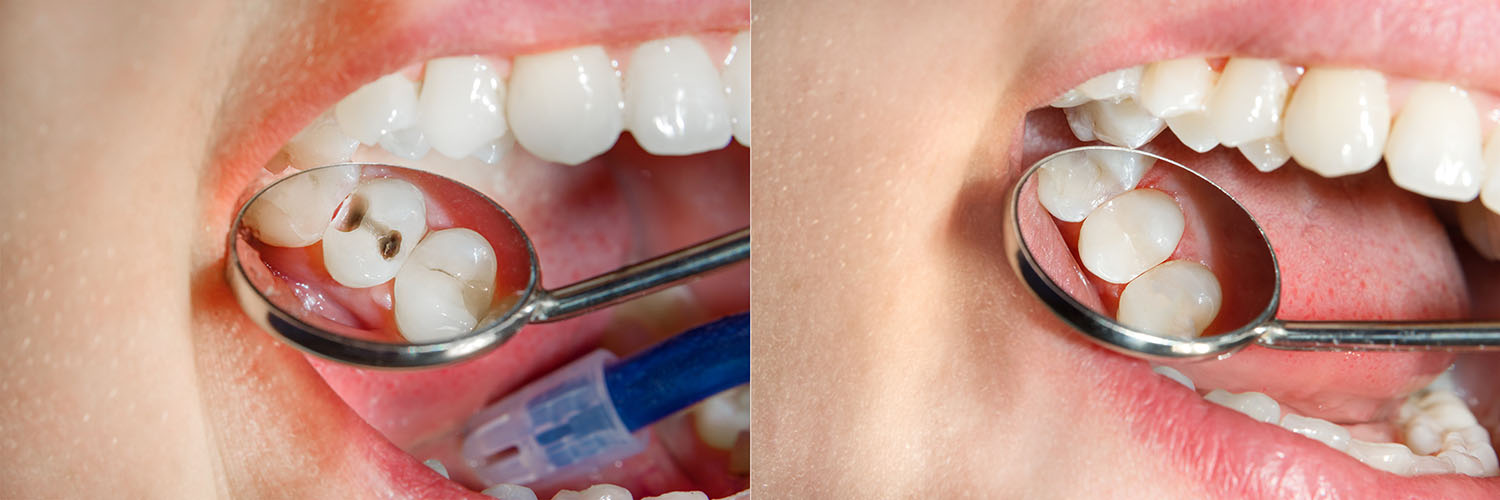
In summary, tooth-colored composite fillings offer a conservative, visually pleasing way to treat cavities and minor damage while preserving natural tooth structure. With careful placement, appropriate aftercare, and routine dental monitoring, these restorations can support both function and aesthetics for years to come. If you have questions about whether a composite filling is the right option for your situation, contact us for more information.


If the pleasure of eating a delicious bowl of ice cream or sipping a soothing cup of tea gets overshadowed by dental pain that makes you wince; it's time to contact our office. As skilled providers of care, we'll determine what's causing your discomfort and perform the treatment required to alleviate your symptoms and get you back on the road to oral health.
Cavities develop because of an infectious process that causes progressive damage to tooth structure. Despite starting as a pinpoint defect on the outermost enamel layer of your tooth, untreated dental decay progressively compromises more and more healthy tooth structure as it works its way to the inner layers of your tooth.
Yes, you can still develop tooth decay on other surfaces of the tooth, around the margins of an old filling, or in fewer instances, recurrent decay underneath it. For this reason, it's essential to maintain excellent oral hygiene, a diet low in sugary beverages and sweets, and be sure to visit our office for routine checkups and care. While tooth decay is second only to the common cold in frequency, it's almost entirely preventable.
We value the time and comfort of our patients. If cavities are located on adjacent teeth, or in the same section of your smile, it may be possible to treat more than one tooth during your visit. However, how much is done each visit depends on several factors. We keep our patients well informed and tailor every treatment plan and visit to address their unique needs.
Addressing concerns on the presence of elemental mercury in silver fillings, the American Dental Association (ADA), The Center for Disease Control and Prevention (CDC), the FDA, and the World Health Organization have all stated that amalgam restorations do not pose a risk to health. However, individuals with allergies or sensitivities to the metals in dental amalgam are advised to pursue other restorative options.
Dental fillings are performed under local anesthesia to help ensure your comfort throughout the entire procedure. The involved tooth remains completely numb for the extent of your visit. Within one or two hours after the procedure is completed, the local anesthetic will gradually wear off, and normal sensations return.
A tooth-colored composite filling is fully hardened and set by the end of your visit. However, we may advise you to wait a couple of hours until the local anesthesia has completely worn off. This advice is to help ensure you don't accidentally bite your lip, cheek, or tongue while still numb.
The lifetime of a dental filling varies depending on the type of material used. While popular dental materials can last a decade or more with proper care, they can degrade over time, wear down, or even break. When this happens, you may experience some tooth sensitivity, a jagged edge, or a loose or dislodged piece of filling material. Whatever the case may be, it's essential to get the filling replaced before the tooth sustains further damage or other consequences arise. Beyond taking good care of your smile to help ensure the longevity of your fillings, our office regularly checks the status of your existing fillings as part of a routine checkup exam.
Dental fillings are an essential investment that serves to preserve and protect the health of your smile. With that said, how much a filling costs depends on the number of surfaces of the tooth involved and the filling material that is used. Amalgam restorations are the most economical. While tooth-colored composite fillings have a slightly higher cost, they offer the added benefits of being metal-free and much more aesthetically pleasing. Ceramic fillings, inlays, and onlays are more expensive than the preceding options but provide outstanding, long-lasting, and natural-looking results.
Dental insurances typically cover the cost of dental fillings. While we work with you to maximize your insurance benefits, there may still be an out-of-pocket expense. At the office of Maryland Dental Center, we strive to help you begin care without any additional financial stress or delay.
Composite fillings are restorations made from a resin-based material that can be matched to the shade and translucency of natural enamel. They are placed directly into the prepared cavity and sculpted to restore the tooth's original shape and contact points. Because they bond to tooth structure, composites provide both aesthetic and functional repair for small to moderate cavities.
Modern composite materials are engineered for strength and wear resistance while remaining metal-free and visually discreet. Clinicians often choose composites when conservation of tooth structure and a natural appearance are priorities. Composite restorations are suitable for many front and back teeth when the remaining tooth supports a direct restoration.
Composite restorations adhere to enamel and dentin using an adhesive technique, which allows clinicians to remove less healthy tooth material during preparation. This conservative approach preserves more of the natural tooth and helps maintain its long-term integrity. Preserving tooth structure also leaves more restorative options open if additional treatment becomes necessary later.
Because the material forms a micromechanical bond with the tooth, it helps seal margins against bacteria and reduces microleakage when placed correctly. Proper isolation, surface preparation, and placement technique are essential to optimize this bond and the longevity of the restoration. Experienced clinicians focus on these steps to support predictable outcomes.
During a typical filling visit the clinician evaluates the area, takes any needed images, and administers local anesthesia to ensure comfort. Decay or damaged material is removed, the preparation is cleaned and conditioned, and composite is placed in layers to control polymerization and reduce shrinkage. Each layer is shaped and cured with a specialized light until the restoration is complete.
The clinician will check contacts, contours, and occlusion so the repaired tooth feels natural and functions properly. Treatment is generally completed in a single visit for most direct restorations, and the team will review aftercare instructions before you leave. At Maryland Dental Center we prioritize clear communication so patients understand each step of the process.
After placement it is normal to experience temporary numbness from local anesthesia and mild sensitivity as the tooth adjusts; avoid chewing until sensation returns to prevent accidental biting of lips or cheek. Maintain good oral hygiene by brushing twice daily with fluoride toothpaste and flossing once a day to protect both the restoration and surrounding teeth. These habits reduce the risk of recurrent decay at restoration margins.
If sensitivity worsens, you experience persistent pain, or you notice a change in your bite, contact the office so the restoration can be evaluated and adjusted if necessary. Routine professional cleanings and exams allow clinicians to monitor restorations and address wear or marginal breakdown early. Timely attention helps prevent more extensive treatment in the future.
Composite fillings can provide many years of reliable service, but their lifespan varies with factors such as the size and location of the restoration, bite forces, and oral habits like grinding. Regular dental exams and radiographs enable clinicians to assess margins, contacts, and the integrity of the restoration so issues can be detected early. Small signs of wear, staining, or marginal breakdown can often be managed before the problem progresses.
When a restoration shows recurrent decay or when a large filling is under heavy functional stress, alternative restorations such as inlays, onlays, or crowns may be recommended to better protect the tooth long term. Your dental team will evaluate remaining tooth structure and functional demands to recommend the most conservative, durable option. Maryland Dental Center monitors restorations periodically to help patients maintain long-term oral health.
When a tooth has lost substantial structure due to decay or fracture, or when a filling has failed repeatedly, indirect restorations such as inlays, onlays, or crowns may be more appropriate to restore strength and function. These restorations are fabricated outside the mouth and can cover or reinforce weakened tooth surfaces more effectively than a direct filling in high-stress situations. The decision depends on remaining tooth structure, the location of the tooth, and occlusal forces.
A clinician will weigh the benefits of a conservative direct restoration against the improved protection and longevity that an indirect restoration can offer. When longevity and resistance to fracture are priorities, an onlay or crown can extend the life of the tooth. Treatment planning focuses on preserving tooth vitality while providing a durable solution for the patient's functional needs.
Composite fillings are metal-free restorations composed of a resin matrix and filler particles, and they do not contain the metallic elements found in traditional amalgam. These materials are biocompatible for the vast majority of patients and offer an aesthetic alternative for those who prefer tooth-colored restorations. Clinicians evaluate each patient's medical and dental history to ensure the chosen material is appropriate.
Patients with specific material sensitivities or unique health concerns should discuss those issues with their dental provider so alternatives can be considered. Proper placement technique and isolation are key to achieving a durable bond and minimizing postoperative sensitivity. Routine monitoring ensures the restoration continues to function as intended.
Yes, composite materials are often used to repair minor chips and to replace old or failing restorations with a more discreet solution. Because composites can be layered and shaded, clinicians can recreate natural contours and textures to restore both appearance and function. Replacing deteriorated restorations early helps prevent recurrent decay and further structural loss.
In some cases, an ageing or repeatedly failing filling may indicate that a more extensive indirect restoration is preferable for long-term success. The dental team will assess the extent of damage, remaining tooth structure, and occlusal considerations when recommending replacement options. Conservative repairs are prioritized when they are predictable and durable.
A properly placed composite filling should restore appropriate occlusion so the tooth fits comfortably within your bite. After placement the clinician will check bite contacts and make fine adjustments to the restoration to eliminate high spots and ensure smooth function. Most patients notice little to no difference once the restoration is polished and adjusted.
If you experience persistent changes in bite, clicking, or discomfort after the numbness wears off, contact your clinician for a prompt re-evaluation. Small adjustments to the filling surface or polish usually resolve occlusal issues. Ongoing reports of bite problems may require further assessment of the restoration and surrounding teeth.
Dental teams use a combination of patient communication, local anesthesia, and gentle technique to prioritize comfort during filling procedures. Clear explanations of each step, topical anesthetic application, and the use of modern anesthetic protocols help reduce discomfort for most patients. For those with higher anxiety, additional options such as nitrous oxide or oral sedation can be discussed to create a more relaxed experience.
Minimally invasive techniques and efficient appointments also contribute to a more predictable and comfortable visit. If you have concerns about sensitivity or anxiety, share them with your dental team so they can tailor the approach to your needs. The goal is to make the procedure as stress-free and effective as possible.

Booking your visit takes a minute.
Reserving your appointment is quick and easy. Book online in just a few clicks, or give us a call if that's simpler — either way, we'll take it from there and look forward to welcoming you in.